Table of contents
- Introduction: The New Frontier of Search
- 1. What Is Generative Engine Optimization (GEO)?
- 2. GEO vs Traditional SEO: What’s the Real Difference?
- 3. Why GEO Matters Right Now
- 4. How to Optimize for GEO: The Core Principles
- A. Focus on “Answer-Level” Content
- B. Build Content That Feeds AI Models
- C. Optimize for Authority and Credibility
- 5. Practical GEO Optimization Strategies
- A. Use “Conversational Queries”
- B. Include Multi-Format Content
- C. Keep Updating — AI Loves Fresh Data
- 6. Key Metrics to Track GEO Success
- 7. Common GEO Mistakes to Avoid
- 8. What’s Next: The Convergence of SEO and GEO
- Conclusion: The Future Belongs to the “AI-Optimized Brand”
How to Optimize for Generative Engine Optimization (GEO) vs Traditional SEO
How to Optimize for Generative Engine Optimization (GEO) vs Traditional SEO
How to Optimize for Generative Engine Optimization (GEO) vs Traditional SEO
How to Optimize for Generative Engine Optimization (GEO) vs Traditional SEO
How to Optimize for Generative Engine Optimization (GEO) vs Traditional SEO
How to Optimize for Generative Engine Optimization (GEO) vs Traditional SEO
Introduction: The New Frontier of Search: Are You Ready for the AI Shift?
For over two decades, SEO (Search Engine Optimization) has been the cornerstone of online visibility. As a forward-thinking digital marketing agency, we have watched brands optimize for Google’s algorithms, chased backlinks, and crafted keyword-rich blogs to earn their place on the first page
But a massive transformation is underway, one that’s rewriting the rules of how people search,
discover, and engage with information.
Generative Engine Optimization (GEO) is a new frontier that focuses on how AI-powered search
tools like ChatGPT, Perplexity, Google’s Search Generative Experience (SGE), and Gemini curate
and summarize information.
Traditional SEO asks, “How do I rank higher on Google?”
AI-Driven Search asks, “How do I become the source that AI chooses to summarize and
recommend?”
Let’s dive deep into how GEO differs from SEO, and more importantly how you can optimize for both.
1. What Is Generative Engine Optimization (GEO)?
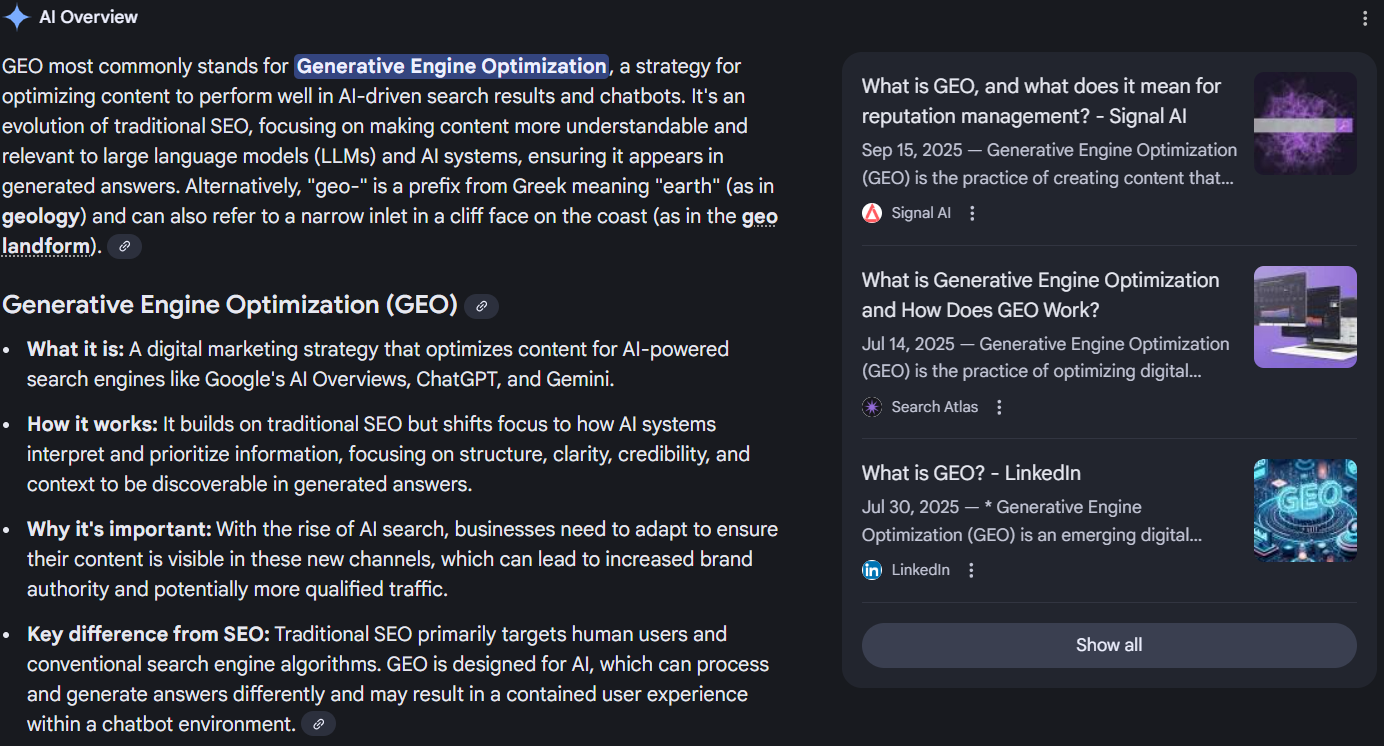
Source: Screenshot via Google SGE
The New Search Reality: An example of an AI Overview summarizing the
definition of Generative Engine Optimization (GEO) from multiple sources.
GEO Defined Simply:
GEO is the process of making your content “AI-friendly” so that generative models (like ChatGPT or Google SGE) recognize it as reliable, relevant, and insightful enough to feature in their responses.
Example:
the AI scans thousands of sources but might cite or summarize one brand’s blog that provides clear, structured, and evidence-backed content.
That’s Generative Engine Optimization in action.
2. GEO vs Traditional SEO: What’s the Real Difference?
| Element | Traditional SEO | Generative Engine Optimization (GEO) |
|---|---|---|
| Goal | Rank high on search engine results pages (SERPs) | Be featured or summarized by AI engines |
| Main Audience | Search algorithms & human readers | AI models & conversational interfaces |
| Key Focus | Keywords, backlinks, on-page optimization | Data structure, clarity, factual consistency, citations |
| Output Format | Links and snippets | AI-generated summaries and answers |
| Time Sensitivity | Slow but stable | Rapidly evolving, AI updates can shift priorities quickly |
Question to Ask:
• Is your content “machine-readable” enough to be trusted by a generative model?
3. Why GEO Matters Right Now
Google’s SGE, Microsoft’s Copilot, and OpenAI’s ChatGPT all generate responses that replace traditional search behavior.
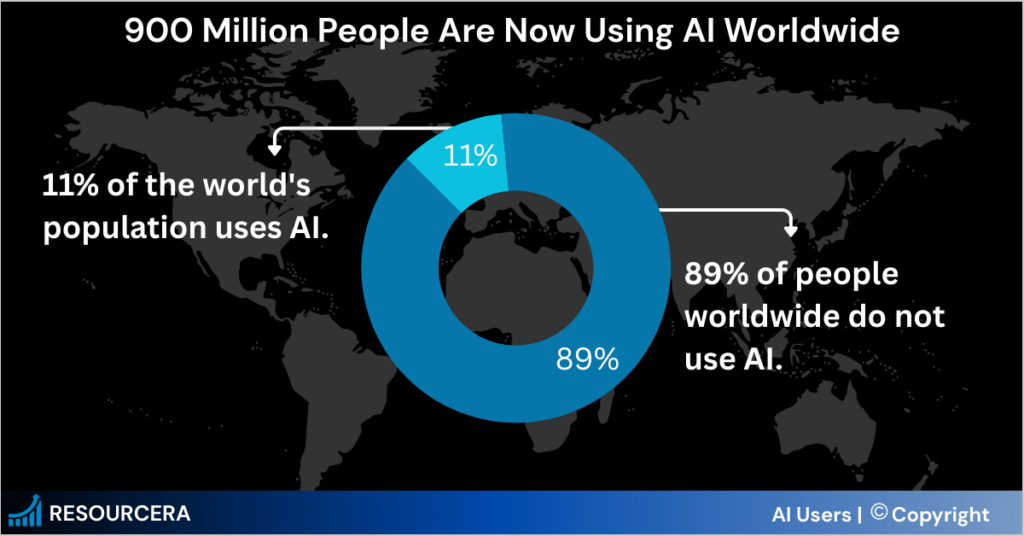
According to recent studies, “Out of all the people in the U.S. who use ChatGPT, 77% use it as a
search engine.”
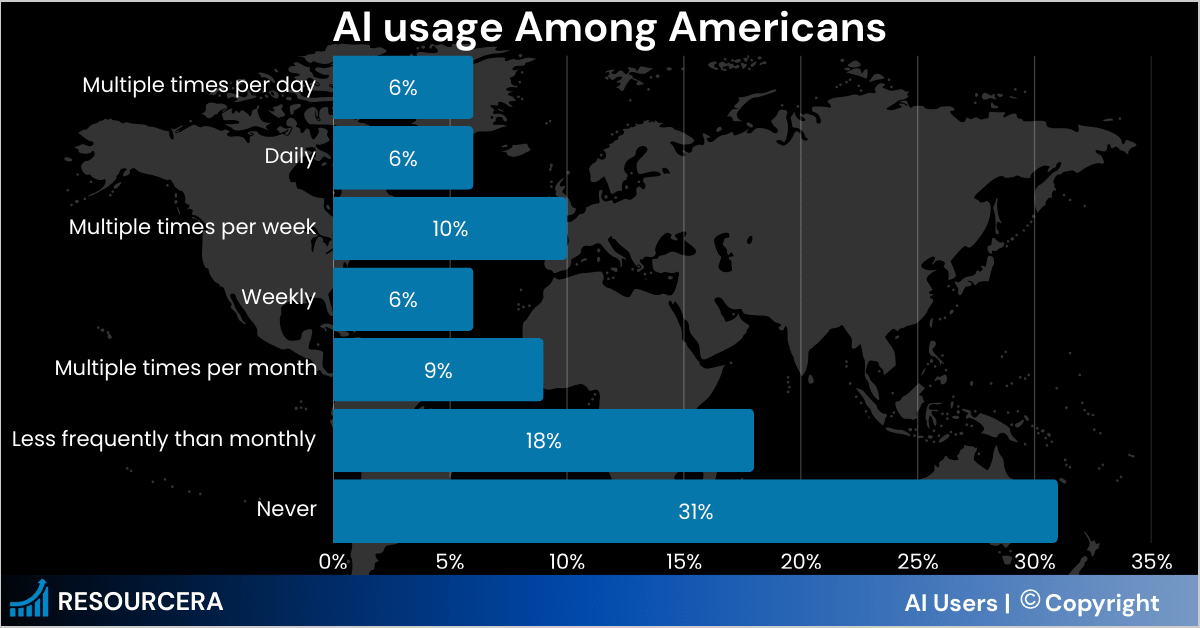
Source: RESOURCERA
The Data Behind the Shift: The accelerating adoption shown in this graph is derived from a recent study by RESOURCERA Understanding this massive user base, 900 million people and growing, is the core strategic reason for prioritizing GEO today
• Future-proofing your visibility in AI-driven search results.
• Owning the narrative that AI tools use to teach, summarize, or recommend.
• Establishing authority across both human and machine audiences.
In short: SEO gets you found. GEO gets you chosen.
4. How to Optimize for GEO: The Core Principles
Here’s how to make your content visible, trustworthy, and generative-engine friendly.
A. Focus on “Answer-Level” Content, Not Just Keywords
Generative models don’t read for keywords they read for meaning and clarity. This requires strategic copywriting that is structured around specific user intents and direct answers.
Instead of writing fluff around a keyword, your content must provide the clear, evidence-backed answers that AI is looking for.
Instead of targeting:
“SEO vs GEO”
Write an in-depth guide that answers:
• “How do AI engines choose what content to summarize?”
• “What makes a page trustworthy for ChatGPT or Google SGE?”
B. Build Content That Feeds AI Models with Facts and Context
That means your website should become a data hub, not just a blog.
Use:
• Schema markup (FAQ, HowTo, Product, Review)
• Citations and source links
• Tables, stats, and definitions AI models love digestible data.
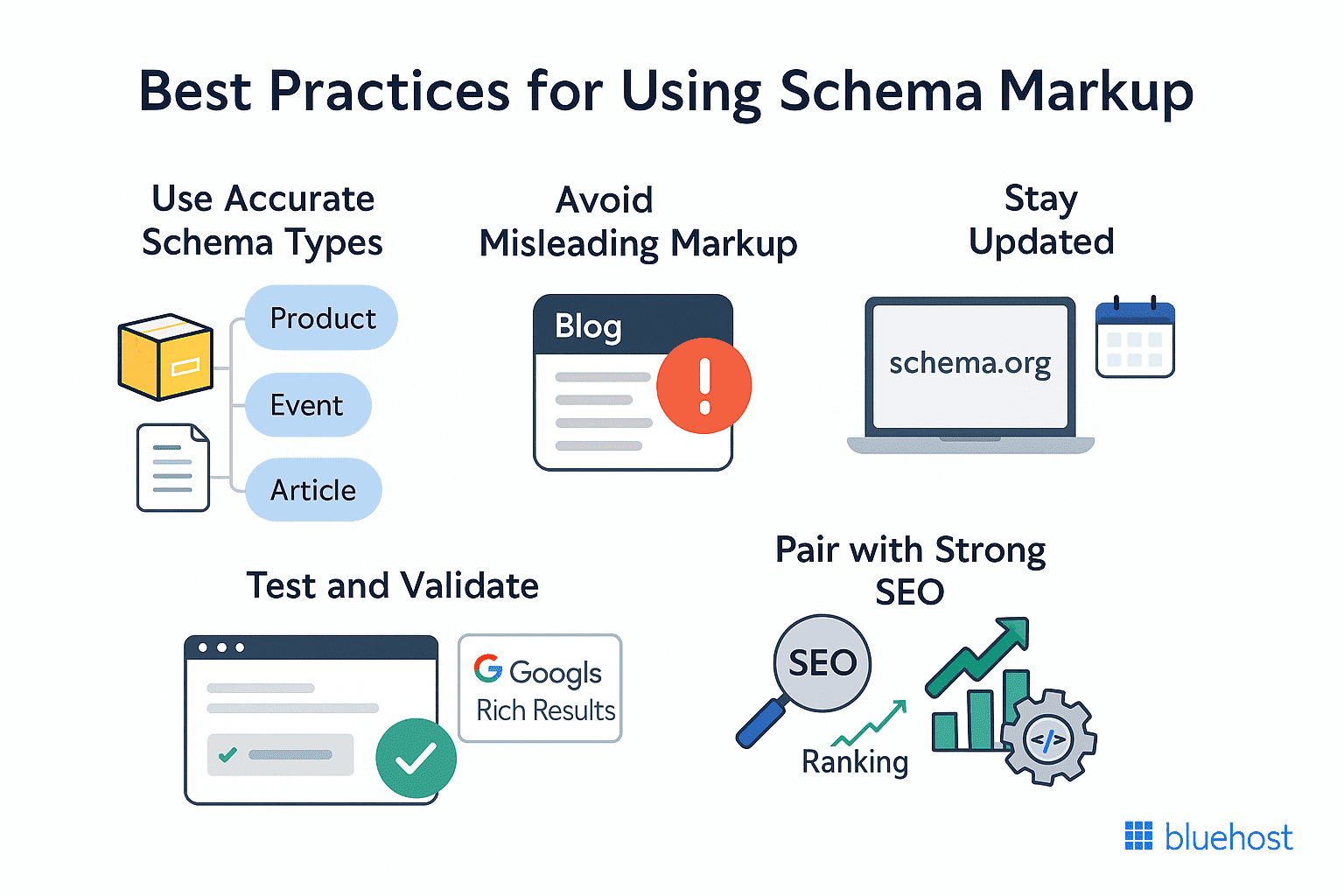
Source: Bluehost
Getting Schema Right: To optimize for GEO, follow these best practices, use specific schema types and always validate your markup.
Instead of saying “GEO is new,” say:
“Generative Engine Optimization (GEO) was first introduced in 2023 as a response to AI-based search engines that generate summaries from indexed content.”
The more factual precision you give, the more likely AI is to trust and cite you.
C. Optimize for Authority and Credibility
AI models pull from sources they believe are accurate, consistent, and reputable.
So:
• Keep your brand’s tone consistent across all content.
• Include expert quotes, data-backed insights, and real references.
• Build digital footprints presence across reputable platforms boosts your domain trust score.
5. Practical GEO Optimization Strategies
Here are actionable strategies that make your content stand out in the era of generative AI.
A. Use “Conversational Queries”
Optimize for natural language, not robotic phrases.
Instead of:
“Best SEO techniques 2025”
Try:
“What are the most effective SEO strategies for 2025 and how do they differ from GEO?”
- This makes your content both searchable and AI-ready.
B. Include Multi-Format Content
That’s why the future of Generative Search includes multi-modal content.
Use visuals that:
• Explain data or trends
• Summarize long guides
• Add context that an AI can describe or cite
Think of your content as teaching material for AI not just marketing material for humans.
C. Keep Updating — AI Loves Fresh Data
Generative engines constantly refresh data pools and outdated content gets deprioritized.
Update your articles every few months with:
• New stats
• Latest AI trends
• Updated tools and terminology
6. Key Metrics to Track GEO Success
Track:
1. Mentions or citations in AI summaries (use tools like Perplexity.ai or SGE preview).
2. Engagement from AI-referred traffic (people clicking after seeing your brand in summaries).
3. Authority score and entity recognition measure how often AI identifies your brand in context.
7. Common GEO Mistakes to Avoid
• Keyword stuffing irrelevant in GEO.
• Ignoring structured data AI skips messy pages.
• No author credibility anonymous blogs lose trust.
• Over-promotion AI filters out sales-heavy content.
GEO rewards clarity, trust, and educational depth not hype.
8. What’s Next: The Convergence of SEO and GEO
Optimizing for Google and optimizing for AI will become one continuous process.
The best marketers will:
• Write for humans and machines simultaneously.
• Use AI tools to test how generative engines read their content.
• Build authority as verified sources across the web.
Because the future isn’t about ranking.
It’s about recognition by both algorithms and AI.
Conclusion: The Future Belongs to the “AI-Optimized Brand”
Generative Engine Optimization isn’t here to replace SEO, it’s here to elevate it.
By making your brand AI-friendly, factually rich, and contextually clear, you’re building authority in the next generation of discovery.
In GEO, your goal is influence.
The brands that master both will own the future of search.
However, navigating this dual landscape, where human curiosity meets machine intelligence, requires a strategic evolution. It’s no longer enough to just chase algorithms; you must anticipate them.
This is the methodology we champion at Advery Agency.
As a premier digital marketing agency in
Tunisia, we believe the strongest strategy is a hybrid one: maintaining the technical backbone of expert SEO search while crafting the authoritative, answer-rich content that AI craves.
FAQ
Traditional SEO (Search Engine Optimization) focuses on ranking your website on search results
pages to drive clicks. GEO (Generative Engine Optimization) focuses on optimizing content so
that AI models (like ChatGPT or Google SGE) trust, summarize, and cite your brand as a primary
source.
No, it will not replace SEO, but it will evolve it. Transactional searches (like buying shoes) will
likely stay on traditional search, while informational searches (learning a topic) will move to AI
summaries. The most successful strategy is a hybrid approach that optimizes for both human
readers and AI algorithms.
Unlike SEO, which tracks rankings and clicks, GEO success is measured by "Share of Model." This
includes how often your brand is cited in AI responses, brand mentions in conversational
queries, and referral traffic from AI-powered engines like Perplexity or Bing Chat.
No. Generative engines focus on context, semantic meaning, and authority rather than keyword
repetition. Instead of stuffing keywords, focus on answering specific user questions clearly and
backing your claims with statistics and expert citations to build trust with the AI.
Not at all. In fact, GEO offers a leveling field for smaller brands. Because AI prioritizes specialized,
high-quality, and factual content over just domain age or backlink volume, a smaller niche expert
can outrank a generalist giant if their content provides better, more specific answers.